Familienhintergrund — Papa war ein Massenmörder, Opa beutete Zwangsarbeiter aus: wie einige Nachkommen von NS-Tätern mit ihrem Erbe umgehen — und warum sie andere ermuntern wollen, es ihnen gleichzutun.
Von Katja Iken, in: Spiegel GESCHICHTE „Antisemitismus“, Heft 3/2021, PAKH-Mitglieder Alexandra Senfft, S. 124-126 und Renée Bertrams, S. 128-129
>> weiterlesen
Lena Ditte Nissen: Menschen mit Nazihintergrund
Beitrag zur Serie „This is Germany“ auf YouTube, Facebook und Instagram
>> anhören
Alexandra Senfft: Menschen mit Nazihintergrund
Beitrag zur Serie „This is Germany“ auf YouTube, Facebook und Instagram
>> anhören
Gestern ist Jetzt: Über den PAKH
Unsere Gäste heute: die Psychotherapeut*innen Erda Siebert und Peter Pogany-Wnendt
PAKH-Mitglied Angela Moré in »Gestern ist Jetzt«
Wie traumatische Erfahrungen weitergegeben werden, das ist das Spezialgebiet von Angela Moré. Das betrifft Verfolgung, Gewalt, der Tod von Angehörigen, Krieg, Vertreibung – aber auch die Schuldverstrickungen in Familien von Verfolgten und von Tätern. Angela Moré ist Professorin für Sozialpsychologie an der Leibniz Universität Hannover sowie Mitbegründerin des gruppenanalytischen Instituts GIGOS
Dohrn-van Rossum, Mercedes, Heist, Hans-Joachim: Kriegskinder und ihre Kinder
Transgenerationale Weitergabe durch Performance
PSYCHE, Februar 2021, 75. Jahrgang, Heft 2, pp 132-164
>> bestellen
25 Jahre PAKH
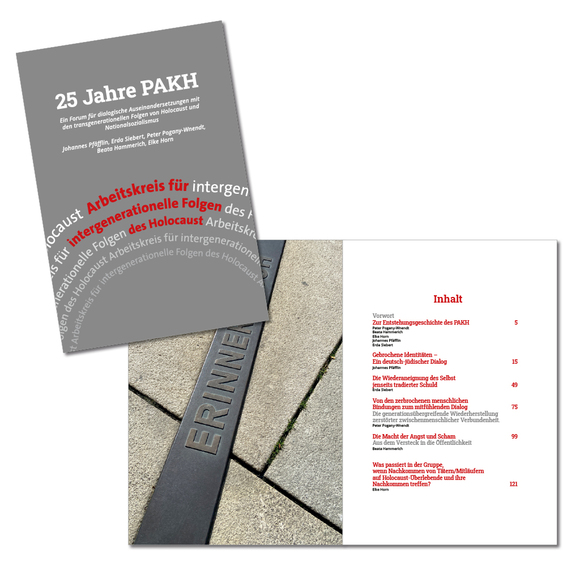
Johannes Pfäfflin, Erda Siebert, Peter Pogany-Wnendt, Beata Hammerich, Elke Horn: Ein Forum für dialogische Auseinandersetzungen mit den transgenerationellen Folgen von Holocaust und Nationalsozialismus
Das Heft ist nur für Mitglieder und nur für die vereinsinterne Verwendung bestimmt
Peter Pogany-Wnendt im Zeitzeugengespräch
Erinnerung an den Holocaust
„Der Toten wegen musste ich jüdisch sein“
Zeitzeugen im Gespräch, Deutschlandfunk
Sendung vom 28.01.2021
Damit der Holocaust nicht vergessen wird, empfiehlt der Psychotherapeut Peter Pogany-Wnendt sich mit der eigenen familiären Geschichte auseinanderzusetzen. Der Holocaust zeige, wie eine Welt ohne Menschlichkeit und Liebe aussehe – heute müssten deswegen die Kräfte der Menschlichkeit gestärkt werden.
Peter Pogany-Wnendt im Gespräch mit Melanie Longerich
Pumla Gobodo-Madikizela (edit.): History, Trauma and Shame
Engaging the Past through Second Generation Dialogue
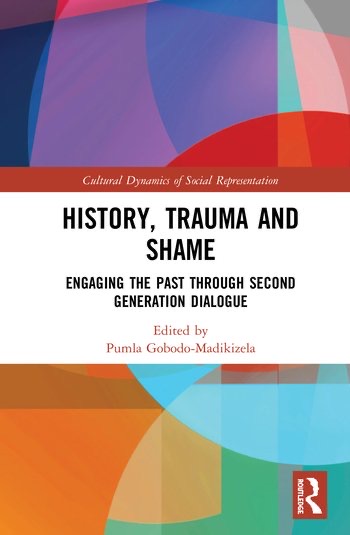
History, Trauma and Shame provides an in-depth examination of the sustained dialogue about the past between children of Holocaust survivors and descendants of families whose parents were either directly or indirectly involved in Nazi crimes. Taking an autobiographical narrative perspective, the chapters in the book explore the intersection of history, trauma and shame, and how change and transformation unfolds over time. The analyses of the encounters described in the book provides a close examination of the process of dialogue among members of The Study Group on Intergenerational Consequences of the Holocaust (PAKH), exploring how Holocaust trauma lives in the ‘everyday’ lives of descendants of survivors. It goes to the heart of the issues at the forefront of contemporary transnational debates about building relationships of trust and reconciliation in societies with a history of genocide and mass political violence. This book will be great interest for academics, researchers and postgraduate students engaged in the study of social psychology, Holocaust or genocide studies, cultural studies, reconciliation studies, historical trauma and peacebuilding. It will also appeal to clinical psychologists, psychiatrists and psychoanalysts, as well as upper-level undergraduate students interested in the above areas.
With contributions by PAKH members Beata Hammerich, Erda Siebert, Peter Pogany-Wnendt, Johannes Pfäfflin and Elke Horn
Pumla Gobodo-Madikizela is Professor and holds the South African National Research Foundation Research Chair in Violent Histories and Transgenerational Trauma in the Faculty of Arts and Social Sciences at Stellenbosch University, South Africa. She is the author of the award-winning A Human Being Died that Night: A South African Story of Forgiveness.
Alexandra Senfft: The Long Shadow of the Perpetrators
This article addresses the transgenerational consequences of the Second World War and the Holocaust for the descendants of the Nazi perpetrators and bystanders. Using the example of her own family, the author traces the external obstacles and the psychological difficulties arising from working through a legacy of crime, compounded by the fact that an atmosphere of taboos, silence and denial has persisted within German families – in spite of all the research and enlightenment in the academic and political spheres. The author argues that the patterns of feeling, thinking and action are often passed down when they are not scrutinised. Meaningful dialogues with the survivors and their descendants, as well as authentic remembrance, the author claims, can only take place if descendants of the victimisers break away from those generationally transmitted narratives which continue to evade the entire truth about the crimes committed by the Nazis and their accomplices in Europe.
in: European Judaism. A Journal for the New Europe, Vol. 53: Issue 2, September 2020, pages 77-86