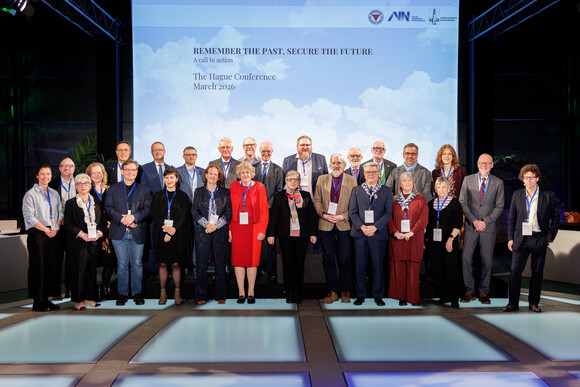
Unser niederländisches Mitglied Martine Letterie gab eine Erklärung zum Schutz der internationalen Gedenkstätten ehemaliger Konzentrationslager bekannt und rief mit den internationalen Komitees dazu auf, die Gedenkstätten auf die UNESCO-Welterbeliste setzen zu lassen.
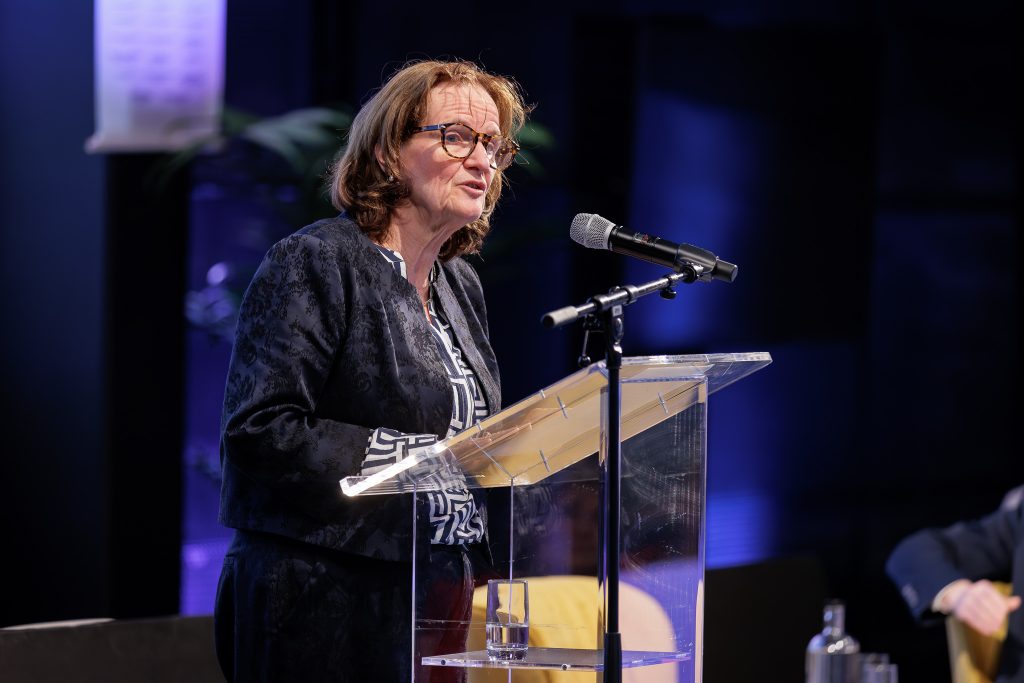
Martine Letterie ist die niederländische Präsidentin der Amicale Internationale KZ-Neuengamme und Enkelin eines niederländischen Häftlings. Sie war zehn Jahre lang Präsidentin der „Stichting Vriendenkring Neuengamme“, dem niederländischen Verband der ehemaligen Häftlinge und ihrer Angehörigen.
Vom 18.-20. März nahm Martine an der von ihr maßgeblich organisierten internationalen Konferenz der Gedenkstätten in Den Haag teil, wo sie die unten stehende Erklärung der Gedenkstätten vorstellte.
Statement
At the end of the Second World War, former prisoners of the Nazi concentration and extermination camps joined together to form various international commitees, in which the national commitees from the different countries are represented: the International Auschwitz Commitee, the International Commitee for Buchenwald, Dora and the Commando camps, the International Dachau Commitee, the International Mauthausen Commitee, the International Natzweiler Commitee, Amicale Internationale KZ Neuengamme, the International Ravensbrück Commitee, and the Internationale Sachsenhausen-Commitee.
Foto: Wouter Vellekoop
At a later stage, the International Freedom Fighters Federation (FIR), the International Holocaust Remembrance Alliance (IHRA) and the Associazione Nazionale Ex Deportati Campi Nazis( (ANED) joined this group of international organisations. These commitees, all operating on a voluntary basis, are commited to representing the interests of those directly affected by the Nazi crimes and their families, and to establishing dignified memorial sites on the sites of the former concentration camps. The latter was one of the reason for establishing an international commitee; together, the former prisoners from different countries were stronger.
Furthermore, it is clear from the commitees’ statutes that their concerns extend beyond this. Without exception, they have stated that they will work towards peace, freedom and a safer, united Europe, free from anti-Semism, anti-ziganism or any form of racism or
discrimination whatsoever. The commitees pledge to fight against neo-Nazism, neo-fascism and revanchism, and the violation of universal human rights.
Eighty-one years after the war, the composition of these boards has changed. The number of former prisoners on the boards has dwindled significantly. We, their children, grandchildren and other descendants, have taken our place alongside them. It is certainly not our intention to speak on behalf of former prisoners, but we often heard their stories first-hand and witnessed the traumatic consequences of National Socialist crimes at close quarters. Because of our family history, we are perhaps more aware than others of the fragility of freedom, the rule of law and democracy. That is why, together with the last survivors, we wish to stand up for their protection.
Over the past decade, the international commitees have met on a number of occasions to consult with one another. The occasions were prompted by threats to the continued existence of a memorial site, or the spread of revanchist historical views by far-right or populist groups in the European Parliament.
This time, our concern about geopolitical developments is the immediate cause, both in Europe and beyond. The world in which we grew up is changing rapidly. The rule of law and democracy seem less and less self-evident. Memorial sites, which are so important to society, are under threat from rising populism; the number of overtly anti-Semitic and neo-Nazi expressions and acts of vandalism against these memorial sites, as well as threats against their staff, has increased dramatically over the past two years.
In 1991, resolutions were adopted by the Council of Europe and the European Parliament calling for these sites to be granted protected status. Unfortunately, to date, insufficient action has been taken in response.
We, the representatives of these international commitees and descendants of former prisoners, together with the management of the memorials affiliated with us, call for the global protection of these memorial sites through their inclusion on UNESCO’s World Heritage List.
This moment of handover is not an end point, but a beginning. Above all, we wish to pass on the torch. With this appeal, we stand at the start of a long and complex process, for which an international working group must be formed, in which the various parties involved must be represented. We are therefore fully aware that we have taken only a small first step, but we hope that this will help to gain your support for our cause.
Foto: Wouter Vellekoop